A PoC radio can power on, register to a mobile network and still be unusable for the team that receives it. The usual problem is not the loudspeaker or the PTT key. It is missing deployment information: the wrong SIM profile, an unconfirmed APN, duplicate device names, or talkgroups that were never agreed with the customer.
This checklist is written for distributors, system integrators and enterprise buyers preparing a Push-to-Talk over Cellular rollout. It focuses on the decisions that should be completed before devices are shipped to users.
1. Confirm the operating countries before choosing a SIM
Start with a country and carrier list, not a general statement such as “the radios will be used internationally.” LTE band support, roaming arrangements and local carrier policies vary by market. A radio that works with one operator is not automatically suitable for every network in the same country.
For each deployment area, record:
- country and primary operating region;
- preferred mobile network operator;
- whether the SIM is local, roaming or private-network based;
- expected indoor, outdoor and vehicle use;
- locations where cellular service is known to be weak.
Check the device’s supported LTE bands against the operator’s deployed bands. This comparison should be completed before placing a volume order, followed by a field trial with the actual SIM card.
2. Treat the APN as deployment data, not a last-minute setting
An Access Point Name identifies the packet-data network a mobile device is trying to reach. The required value comes from the mobile operator or private-network administrator. Some SIM cards obtain it automatically; others require a specific APN, authentication method, username or password.
The deployment file should state whether the device needs:
- automatic or manual APN configuration;
- a public or private APN;
- username and password authentication;
- a static or dynamically assigned address;
- roaming data enabled;
- operator restrictions on voice-over-data or persistent connections.
3. Decide who owns the PoC platform account
The device and the service platform are separate parts of the deployment. Before provisioning begins, the buyer and supplier should agree who creates the tenant, who pays recurring service fees, and who retains administrator access after delivery.
Confirm the following in writing:
- platform name and service region;
- tenant or organization name;
- account owner and technical administrator;
- license start date and renewal responsibility;
- device replacement and account-transfer procedure;
- required functions such as GPS, recording, emergency alerts or dispatch.
4. Build the talkgroup plan around work, not the organization chart
A talkgroup list is easier to use when it reflects how people communicate during a shift. A transport company, for example, may need one group for all drivers, separate depot groups and a supervisor group. Copying every department from an organization chart often produces too many channels for a handheld user to navigate quickly.
For each talkgroup, define:
- group name as it should appear on the radio;
- members and supervisors;
- whether dispatchers can monitor or transmit;
- whether users may change groups themselves;
- priority or emergency behavior, if supported;
- recording and retention requirements, if applicable.
Keep names short and distinct. “North Depot” and “North Delivery” are easier to recognize than abbreviations understood only by the person who created the account.
5. Separate dispatcher permissions from radio-user permissions
A dispatcher may be able to view locations, create groups, disable devices or review recordings. Those permissions should not be granted to every operator. Prepare a simple role matrix before accounts are created.
| Role | Typical access to confirm |
|---|---|
| Radio user | Assigned groups, private call and emergency functions |
| Shift supervisor | Multiple operational groups and escalation group |
| Dispatcher | Console communication and approved location functions |
| System administrator | User, device, group and license management |
The exact permissions depend on the chosen platform. The table is a planning starting point, not a statement that every platform provides every function.
6. Use a consistent device naming rule
Device names should allow support staff to identify the physical radio without opening the enclosure or asking the user to read a long serial number. A practical naming pattern might combine site, team and unit number—for example, “US-TX-WH-023” for warehouse unit 23 in Texas, United States.
Keep one controlled handover sheet containing:
- device name;
- hardware model;
- serial number or IMEI;
- SIM identifier;
- assigned user or vehicle;
- platform account;
- firmware version;
- delivery and activation date.
This record becomes particularly useful when a device is replaced, moved to another site or returned for service.
7. Run an acceptance test on the real network
The acceptance test should include:
- cold start and platform login;
- group call in both directions;
- private call, if required;
- movement between indoor and outdoor coverage;
- recovery after a temporary network loss;
- dispatcher-to-radio and radio-to-dispatcher calls;
- emergency or priority operation, where enabled;
- GPS reporting, where enabled and permitted;
- a normal-shift battery trial;
- charging, accessory and spare-unit checks.
Record the SIM, network, location, time and software version used for each test. “Worked correctly” is not enough information to reproduce a problem later.
Information to send before requesting a PoC quotation
A useful request for quotation should include the deployment countries, number of users, preferred carrier or SIM type, required platform, talkgroup structure, dispatcher requirements, working environment, accessories and expected delivery date. If the platform has not been selected, state the functions you need rather than guessing a platform name.
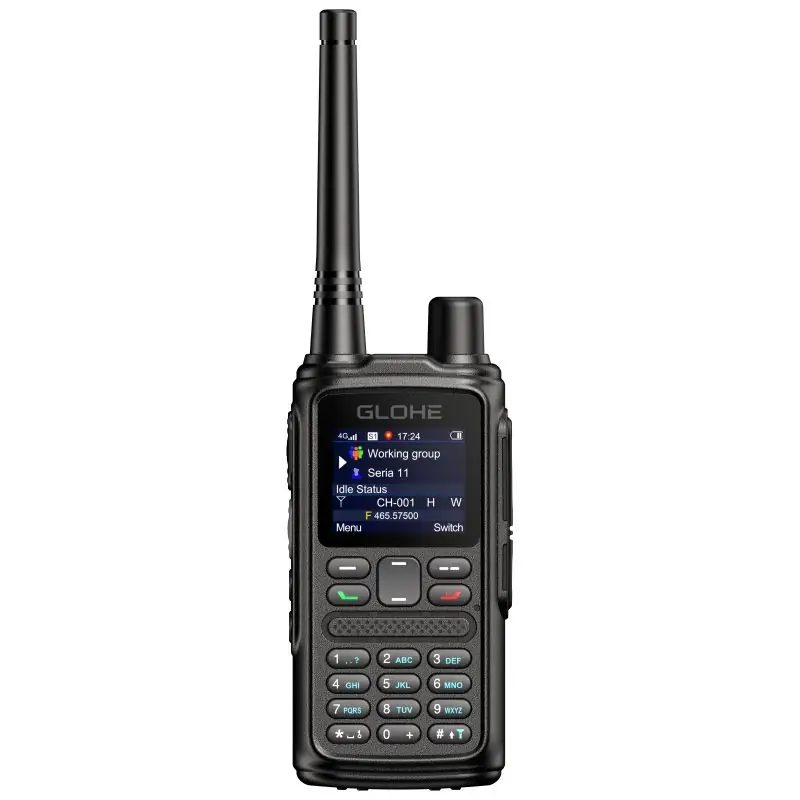
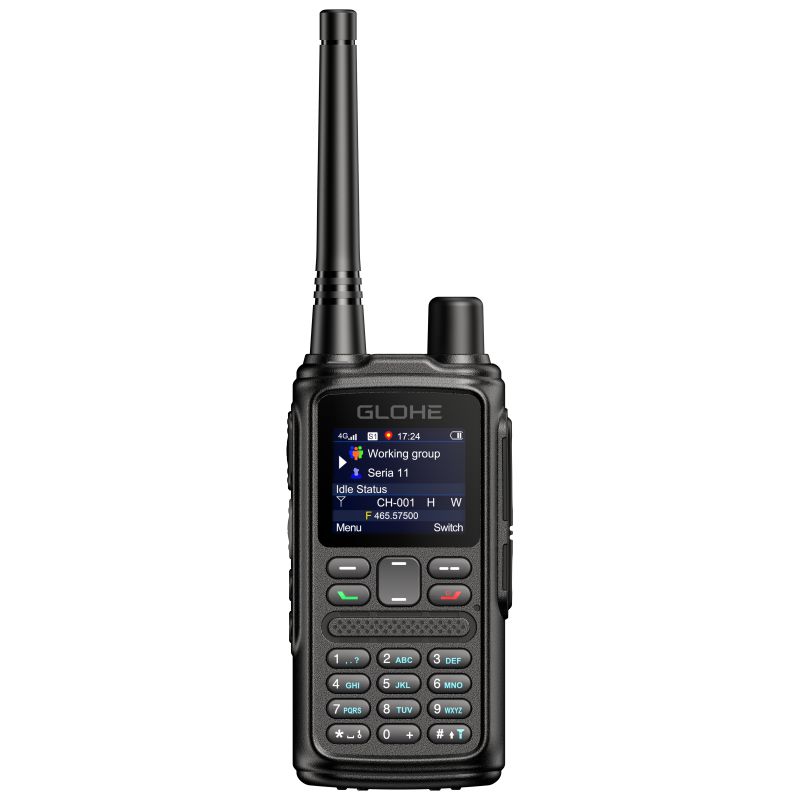
Buyers considering a hybrid LTE and analog deployment can review the GLOHE AP200C, which lists LTE PoC, analog radio and dual-SIM support. Like other GLOHE PoC models, it can be configured for mainstream platforms such as REALPTT and GXIN POC GLOBAL. Final network bands, platform functions and optional features should be reconfirmed for the ordered configuration. For broader project planning, see GLOHE communication solutions.
Before the radios leave the factory
The final check is simple: one approved SIM profile, one confirmed platform, one controlled talkgroup list and one repeatable acceptance test. Completing those items before shipment reduces rework and gives the customer a deployment that can be supported after the first day.
Need a PoC deployment recommendation?
Send us the operating country, number of users, preferred platform and dispatcher requirements. GLOHE can recommend and pre-configure suitable PoC models for REALPTT, GXIN POC GLOBAL and other mainstream platforms.